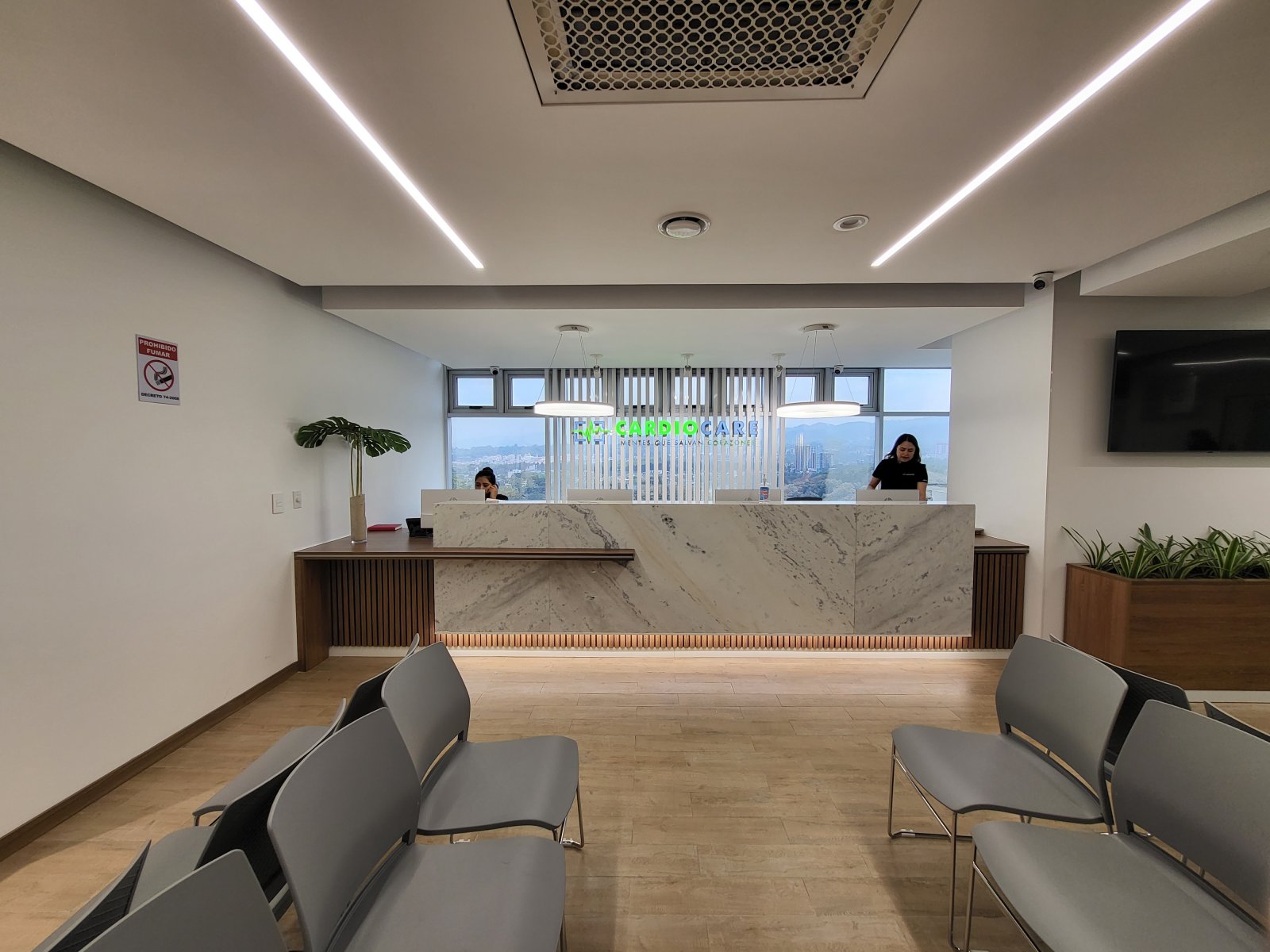








Clinica del Centro Medico II
6ta Av. 3-22, zona 10, 6º Nivel Clínica 606
Guatemala Guatemala, Centro América
Call us: (502) 2313 9999
Emergencies: 1700 UNIT CARDIOCARE
Work Schedule : 7:00AM a 7:00PM
Stress Echo (Treadmill) is a test that uses ultrasound to obtain images of the heart before and after exercise. These images at rest and immediately after exercise are compared to identify abnormalities that appear only with physical exertion and thus may help to determine a heart condition.
The test: This is a color Doppler echocardiography at rest, which evaluates the performance of the various portions of the heart muscle and heart valves.
The patient walks on the treadmill to reach the heart rates as in an exercise stress test. Upon reaching the goal, the patient leans back on the couch and ultrasound images are obtained, to compare both results.
The ultrasound images will changes in the walls that may not be receiving an adequate amount of blood in the coronary arteries during a physical effort.
This test differs from a stress test on treadmill, where no images are obtained.
Preparation for the test:
• The patient shall not eat, smoke or drink beverages with caffeine or alcohol three hours before the test.
• The patient should continue taking all medications unless otherwise indicated.
• Comfortable shoes and suitable clothes are required.
• The patient should inform the doctor if he/she is taking drugs like Viagra, Cialis or Levitra or similar drugs or has taken them within the last 24 hours, if this is so, the appointment has to be cancelled.
This is necessary because nitroglycerin, a drug sometimes required to be administered during a stress test to relieve chest pain, should not be administered to someone who has recently taken such drugs, because this combination could cause a significant drop in blood pressure.
For the test:
• Electrodes are placed in the chest to record the electrical activity of the heart. You may feel a little burning at the site of electrode, which may even be considered as a sign that the preparation is adequate, because removing as much loose particles from the skin, as possible reduces distortion of the electrical signals, which makes the interpretation of results easier.
• The arm cuff is inflated several times during the test, increasing the pressure. Measurements of heart rate, blood pressure and ECG are taken before, during and at the end of the test for the respective comparisons.
• The patient starts to walk on a treadmill. The speed and inclination of the belt will gradually increase according to the settings chosen by your doctor. The duration may vary and depends on the physical condition, age and state of each individual.
• Rarely, people experience chest discomfort, palpitations, dizziness or trouble breathing during the test, but if this happens, these should be reported immediately to the doctor.
Reasons for the study:
It is performed to determine alterations in the blood that flows into the heart through the coronary arteries, as during exercise. The aim is to discover and treat any blockage or disease before they develop into more serious problems or become potentially dangerous.
This test is used to evaluate the response to specific treatment and to monitor the progress of heart disease already established, because it is possible to repeat it as often as necessary.
Risks:
The risks of complications are very low. It is a very safe test as well and the procedure is performed under strict medical supervision and continuous cardiovascular monitoring. It also must take into account that people more likely to suffer such complications are excluded from this test and the doctor may choose other alternatives to corroborate the suspected diagnosis.
Tell your doctor if you are taking sildenafil (Viagra) and other similar drug or if you have taken these within the past 24 hours, to change the appontment. This is necessary because nitroglycerin, a drug that is sometimes required during a stress test to relieve chest pain, should not be given to someone who has recently taken this drug, because this combination could cause a significant drop in blood pressure.
Special considerations:
The main benefit is that a stress echocardiogram is a non-invasive and effective test to evaluate a person with a suspected form of blockage in the flow of the coronary arteries that are supplying blood to various heart walls, so that the problem is diagnosed as early as possible to receive treatment as soon as possible.